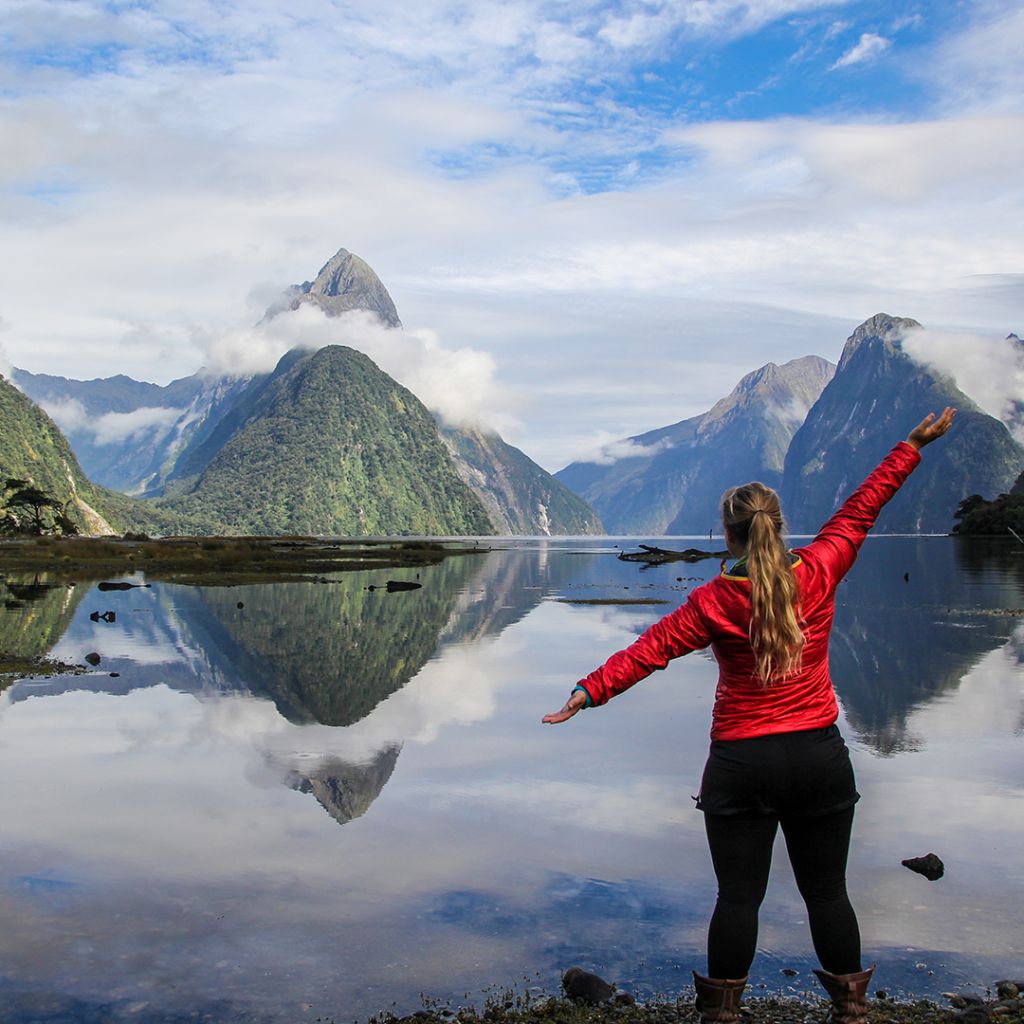
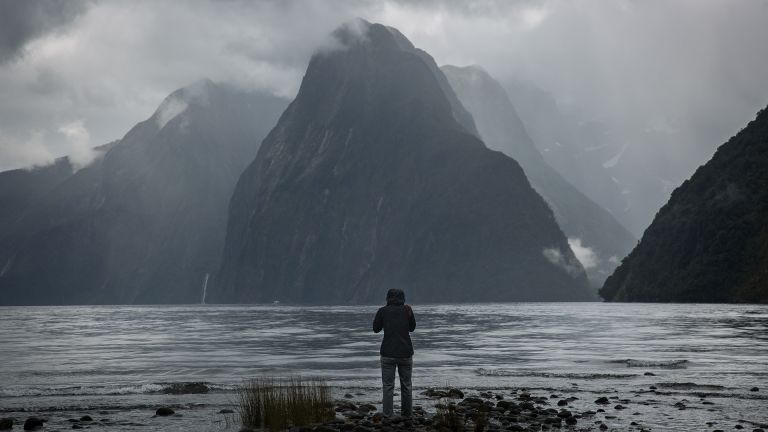
Despite being one of the most accessible fiords, Milford Sound remains quiet and still, bounded by steep cliffs and dense rainforest. Rain or shine, Milford Sound continues to captivate even the most travelled. At the pinnacle of Milford sound is the magnetising Mitre Peak - standing a proud 1,692 metres above sea level it is certainly an impressive sight to behold. The Milford Sound is by far the best known of all of the fiords in New Zealand and the only one that can be accessed by road. It is approximately 16km from the head of the fiord to the open sea, which means visitors can comfortably travel the length of the fiord to open ocean and return on one of the many cruise options. Image above: Milford Sound by Jo@net, on flickr.
-
The History & Maori Legend
Maori are believed to have discovered Milford Sound more than 1,000 years ago, returning seasonally to the fiord, collecting the much prized pounamu (greenstone). These treks from the east used traditional pathways across passes such as MacKinnon Pass on the Milford Track. The Maori named the sound Piopiotahi after the thrush-like piopio bird, which is now extinct.
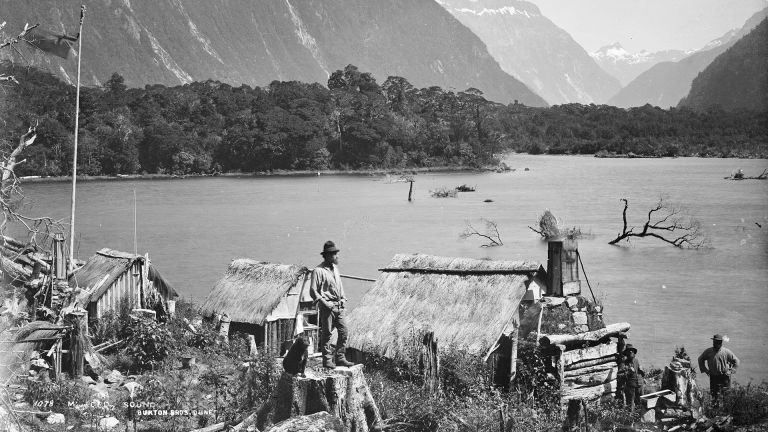
In 1912 John Grono was the first European settler to land in the sound. He named Milford Sound after Milford Haven in Wales.
-
The Maori name for Milford Sound, Piopiotahi, means "a single piopio", harking back to the legend of Maui trying to win immortality for mankind - when Maui died in the attempt, a piopio was said to have flown here in mourning.
According to Maori Legend, Piopiotahi was carved out by Tu-te-raki-whanoa, an atua (godly figure) who was given the task of shaping the Fiordland coast. Chanting a powerful karakia (prayer), he hacked at the towering rock walls with his toki (adze) called Te Hamo.
-
-
-
Flora & Fauna
The underwater environment in the fiords is one of the most intriguing and unique in the world. This is not only because of the beautiful natural environment and the marine reserves that exist here, but also because of an interesting effect of the high rainfall in the area. As rainfall drains through the lush forests, it becomes stained with tannins until it is the colour of strong tea.The fiords support the world's biggest population of black coral trees - about seven million colonies, some of them up to 200 years old.
-
Geology
Milford Sound, located at the northern most end of Fiordland National Park on the South Island of New Zealand, is a national icon. In places as much as 400 metres deep, celebrated for its pristine landscapes, and remote and rugged beauty, it is actually a fiord, rather than a sound. A river formed valley subsequently flooded by the sea is called a sound, however, Milford Sound was formed by the erosive effects of a glacier and is more correctly a fiord.
-
Named after its resemblance to a bishop’s mitre (head-dress), Mitre Peak is a prominent peak on the south shore of Milford Sound. Rising 1692 metres, seemingly sheer above the Sound, the summit actually consists of five closely grouped individual peaks. Milford Sound. Rising 1692 metres, seemingly sheer above the Sound, the summit actually consists of five closely grouped individual peaks.
Image below:Road to Milford, by BriYYZ, on flickr.
-
-
-
Climate
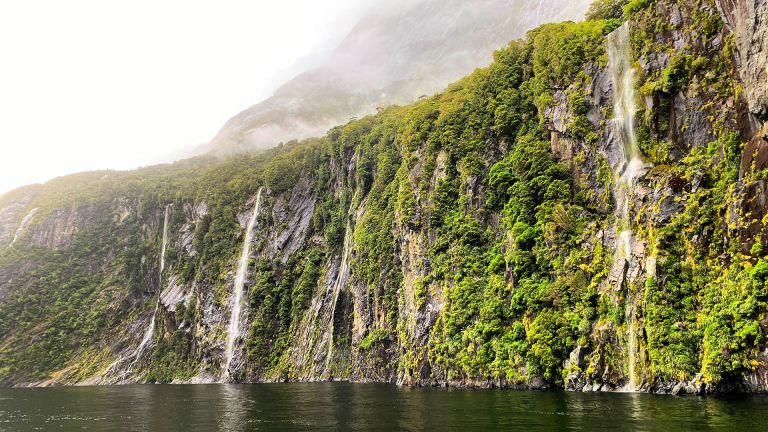
With a mean annual rainfall of 6,813 mm on 182 days a year, a high level even for the West Coast, Milford Sound is known as the wettest inhabited place in New Zealand and one of the wettest in the world. Rainfall can reach 250 mm during a span of 24 hours. The rainfall creates dozens of temporary waterfalls (as well as a number of major, more permanent ones) cascading down the cliff faces, some reaching a thousand metres in length. Smaller falls from such heights may never reach the bottom of the sound, drifting away in the wind.